Basement Water Keeps Coming Back? Here's How to Choose Between Interior and Exterior Waterproofing
Quick Answer: Exterior waterproofing stops water before it ever touches your foundation wall by sealing and draining at the source outside the house. Interior waterproofing manages water after it has already gotten past that wall, catching it at the floor line and routing it to a sump pump before it spreads. Neither one is automatically "better." The right choice depends on how the water is entering, how your yard is graded, and what your foundation walls look like once someone actually gets eyes on them. Many basements end up needing both working together.
Why Your Basement Is Taking on Water in the First Place
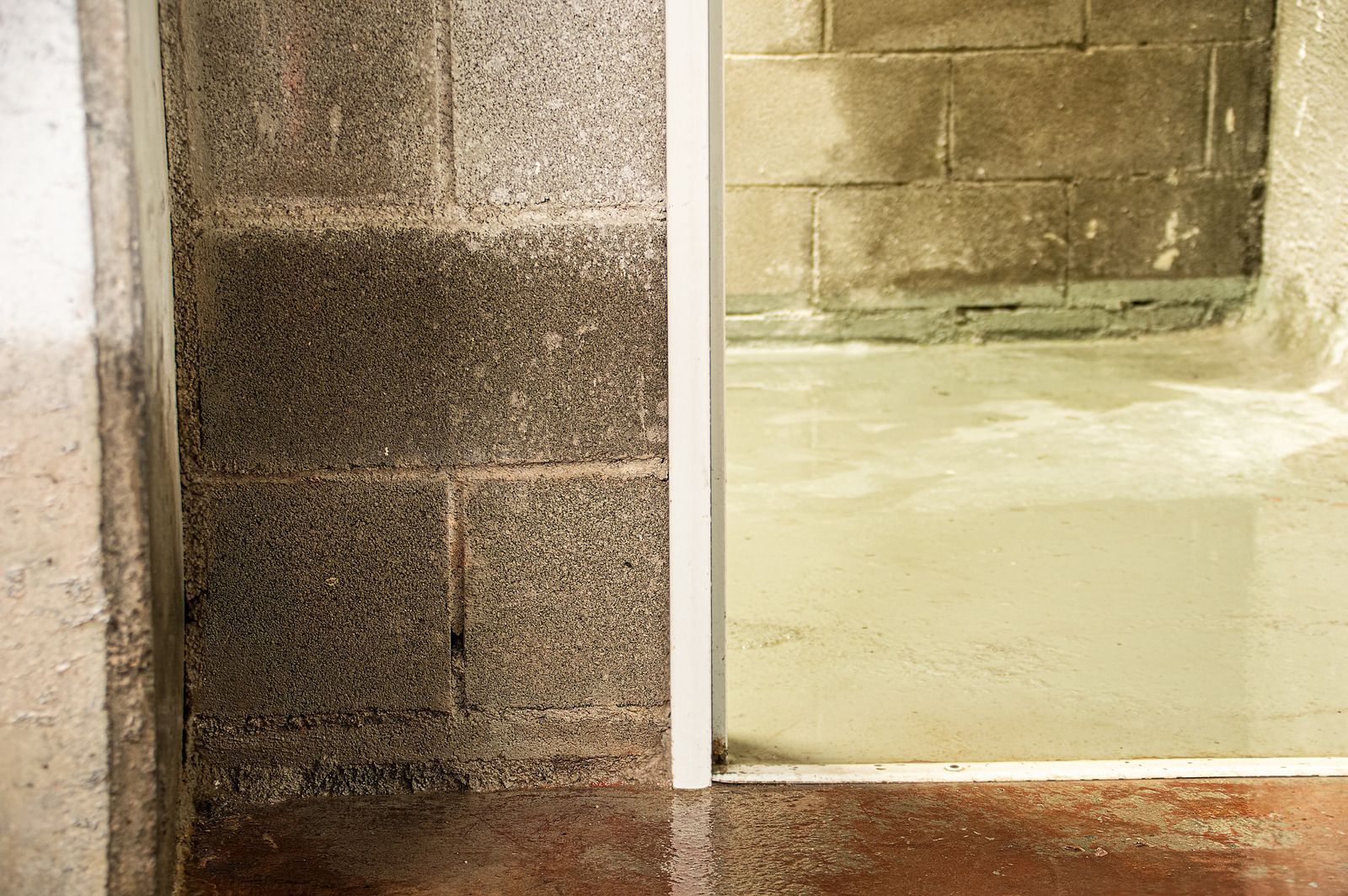
Water doesn't punch a hole in your wall and walk in. It works its way through concrete pores, hairline cracks, and the joint where your wall meets the floor slab, and it does this slowly enough that you often don't notice until there's a stain, a smell, or a puddle after a hard rain. By the time any of those show up, the moisture has usually been moving through the wall for weeks or months already.
Soil is doing most of the work here. Metro Atlanta and the Gwinnett County area sit on clay-heavy ground that swells when it's saturated and shrinks when it dries out. That swelling pushes against your foundation with real, sustained force, a phenomenon engineers call hydrostatic pressure. Add a hard summer thunderstorm on top of a soil bed that's already primed to expand, and that pressure spikes fast. It's one of the more consistent reasons basement walls in this region crack, bow, or start leaking at the same spot year after year.
Clay soil also pulls water upward and sideways through capillary action, essentially wicking moisture the way a paper towel does, and it can carry that moisture more than a dozen feet through the material before it ever reaches daylight. That's why a basement can feel damp along the base of the walls even when there's no visible crack anywhere nearby. The water isn't punching through. It's seeping through pore structure that's been there since the concrete was poured.
What Exterior Waterproofing Actually Does
Exterior waterproofing goes after the problem where it starts. Crews excavate around the foundation perimeter down to the footing, apply a waterproof membrane directly to the outside of the wall, and install a drainage board that channels water down and away instead of letting it sit against the concrete. Done right, this stops water from ever reaching the inside surface of your wall in the first place.
This is the more thorough option because it addresses hydrostatic pressure directly rather than managing its aftermath. It also tends to be more disruptive. Digging around a foundation means moving landscaping, patios, and anything else planted or built too close to the house, and the scope depends heavily on how much of the perimeter needs attention. For homes with wall cracks caused by outside pressure, or for basements where water is entering high on the wall rather than at the floor line, exterior work is often the only approach that actually solves the underlying cause instead of just controlling the symptom.
What Interior Waterproofing Actually Does
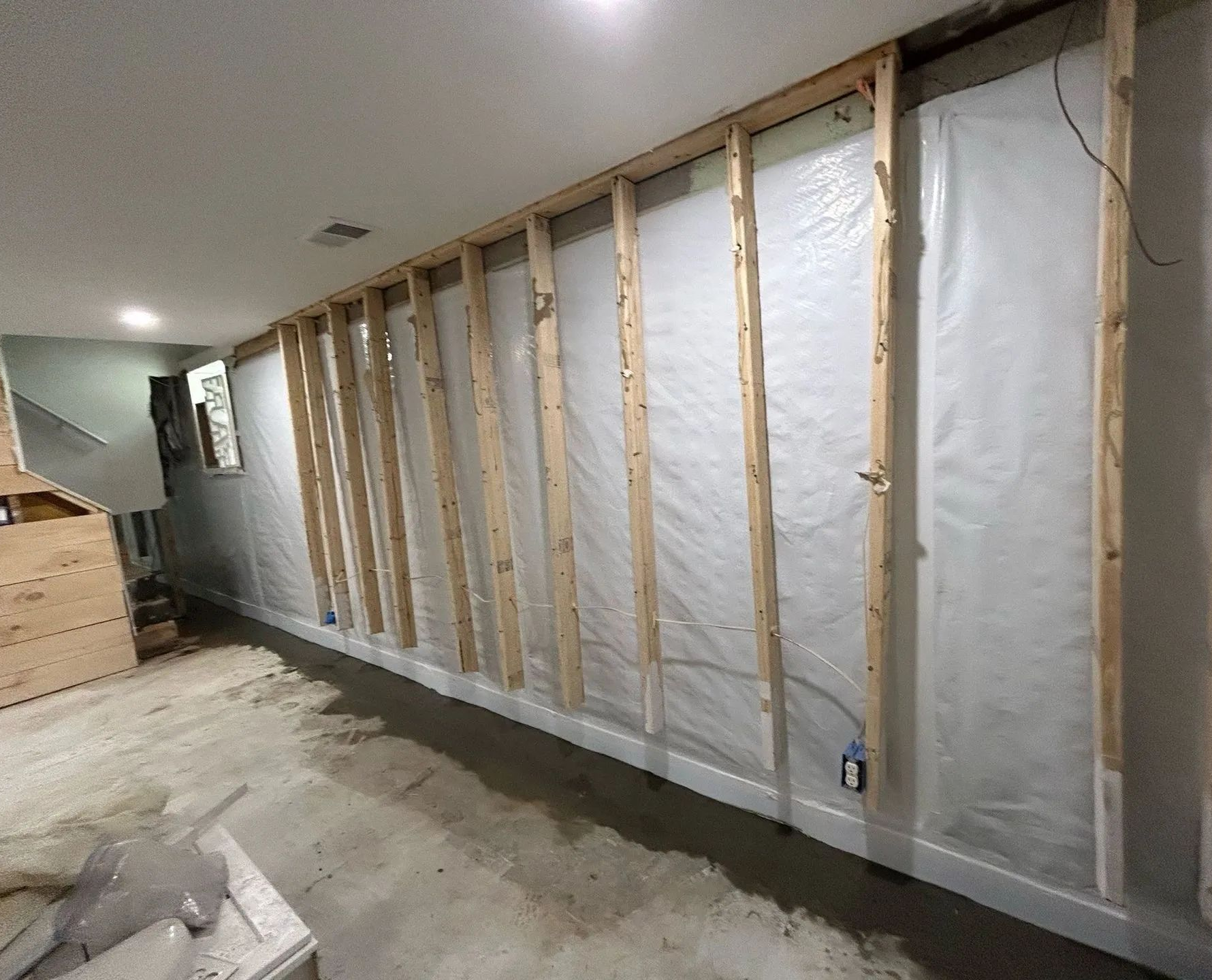
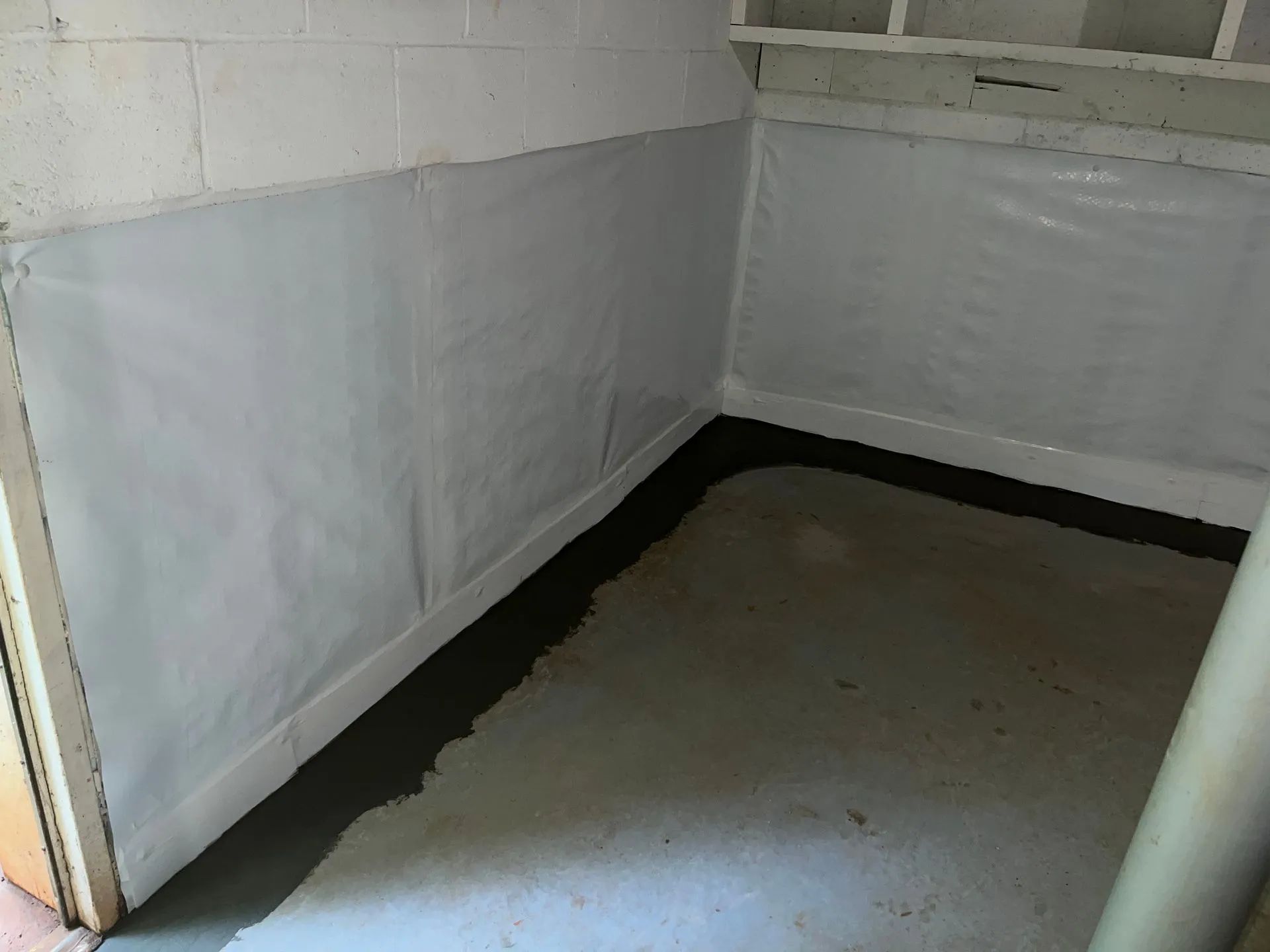
Interior systems take a different position. Instead of stopping water outside the wall, they intercept it after it's already inside, right at the point where the wall meets the floor. A drainage channel installed along that perimeter collects water and routes it to a sump pump, which then pushes it out of the house before it has a chance to pool.
This approach makes sense when excavation around the outside of the house isn't practical, whether that's because of a finished patio, a retaining wall, mature landscaping, or a property line that leaves no room to dig. It's also generally less invasive to install, since the work happens inside the basement rather than in the yard. A submersible sump pump with a battery backup matters here more than most homeowners realize, especially since the storms that generate the heaviest water intrusion are often the same storms that knock out power.
TIP: If your basement only takes on water during the heaviest storms of the year and stays dry the rest of the time, pay close attention to where the water first appears. Water tracking in low, along the wall-floor joint, points toward an interior drainage solution. Water staining higher up on the wall itself usually means the pressure is coming from outside and deserves a closer look before anyone starts cutting into your floor slab.
Reading the Signs Your Basement Is Sending You
A few signals show up long before standing water does, and they're worth paying attention to because they tell you roughly where the problem lives. White, chalky mineral deposits on a wall, known as efflorescence, mean water has already moved through the concrete and left salts behind on the surface, whether or not you've ever seen liquid water on the floor. A musty smell that won't go away regardless of how much you clean usually points to mold or mildew feeding on humidity that's coming from somewhere in the foundation, not just poor airflow.
Horizontal staining or tide marks near the base of a wall map out exactly how high water has risen during past storms, which is useful for telling a floor-level seep apart from wall-level pressure. Peeling or bubbling paint on a basement wall is another tell. Moisture trapped behind a coating builds pressure until the paint lifts off, and that's a sign surface-level fixes were never going to hold in that spot regardless of how carefully they were applied.
Doors and windows that stick, especially ones that used to open fine, can mean something bigger is happening beneath the floor. Foundation movement from soil pressure doesn't always show up as a dramatic crack. Sometimes it just shows up as a door frame that's a few millimeters out of square.
Georgia's weather pattern makes this cycle worse than it looks on paper. The region swings between heavy rain and stretches of drought, and that back-and-forth keeps clay soil constantly expanding and contracting instead of settling into a steady state. Every swing puts the foundation through another round of stress, which is part of why basement problems in this area tend to be recurring rather than one-time events.
WARNING: Don't assume a small crack is harmless just because it isn't leaking today. Cracks that are actively growing, running diagonally, or wider than a pencil lead can indicate ongoing structural movement rather than normal concrete curing. A crack like that should get a proper look before it becomes a bigger opening for water, and definitely before you paint over it or patch it yourself with a tube of caulk from the hardware store.
When Your Basement Needs Both Systems Working Together
Plenty of basements don't fit neatly into one category. A wall might have a section under enough outside pressure to justify exterior membrane work, while a different part of the same basement is taking on water at the floor joint in a way only an interior drain will catch. In those cases, the two approaches aren't competing options, they're complementary layers. Exterior work reduces how much water ever reaches the wall. Interior drainage backed by a sump pump handles whatever gets through anyway, whether that's from a section of foundation that wasn't excavated or from interior sources like an old water heater or an unexpected pipe leak.
A proper inspection is what separates a guess from an actual plan. Someone needs to look at the wall from the inside, check for cracks and staining patterns, walk the yard to see how it's graded, and check whether the gutters and downspouts are actually moving water away from the house or dumping it right next to the foundation. Grading problems and clogged downspouts are two of the most common contributors to basement moisture, and both are relatively simple to identify once someone's actually looking for them.
What Happens If You Wait
Basement moisture doesn't stay basement moisture for long. Humidity from a damp foundation moves upward through the house, and that constant moisture load can worsen indoor air quality throughout every floor above, not just the one below grade. Building science guidance generally points to keeping indoor relative humidity between 30 and 50 percent to limit mold growth, and a chronically wet basement makes that range almost impossible to hold onto without running a dehumidifier around the clock.
The other consequence is structural. Wood framing near a wet foundation can start to soften and rot, metal fixtures near persistent moisture develop rust, and the stress on a saturated foundation wall accelerates whatever cracking has already started. None of that reverses itself. It only compounds the longer water keeps finding its way in.
Frequently Asked Questions
Can I tell whether I need interior or exterior waterproofing just by looking at my basement myself?
You can get a decent read on it. Water entering low along the floor usually points toward interior drainage, while staining or cracking higher on the wall often signals outside pressure that needs to be addressed at the source. A hands-on inspection is still the only reliable way to confirm what's actually happening behind the wall.
Is interior waterproofing less effective than exterior waterproofing?
Not necessarily. It manages water differently rather than doing a worse job. Interior systems are excellent at controlling water that's already found a path inside, and for many homes, especially ones where excavation isn't practical, that's exactly what solves the problem.
Will fixing my gutters and grading solve the problem on its own?
Sometimes. Poor grading and overflowing gutters are common contributors to basement water, and correcting them can noticeably reduce how much water reaches your foundation in the first place. If the basement is already showing signs like efflorescence or active seepage, though, grading fixes alone usually aren't enough to fully resolve it.
How do I know if a crack in my foundation wall is something to worry about?
Small, stable hairline cracks are common in poured concrete and often aren't a major concern. Cracks that are growing, running at an angle, wider than a pencil, or accompanied by moisture deserve a closer look, since they can be both a structural signal and an active water pathway.
Does a sump pump need a battery backup?
It's worth having one. Georgia's heaviest storms are frequently the same storms that knock out power, and a sump pump that can't run during an outage isn't protecting anything when you need it most.
Choosing the Right Waterproofing Solution for Long-Term Protection
For homeowners in Lawrenceville, GA, understanding why water is entering the basement is far more valuable than focusing on one waterproofing method over another. Every foundation responds differently to soil conditions, drainage patterns, construction style, and seasonal weather changes, so the most effective solution is always based on the actual source of the moisture rather than assumptions. Looking at the entire property helps ensure repairs address the cause instead of only the visible symptoms.
With 10+ years of experience, Leader Waterproofing and Construction
understands how Georgia's expansive clay soils and heavy rainfall influence basement performance over time. Whether a home benefits from interior drainage, exterior waterproofing, or a combination of both, the objective is creating a foundation system that remains dry, stable, and resilient through changing seasons. A thoughtful evaluation provides homeowners with a clearer understanding of their property's condition and the approach best suited for lasting protection.