What Causes Water to Seep Through Basement Walls
Quick Answer: Water most often seeps through basement walls because saturated soil around your foundation pushes moisture through cracks, porous concrete, and the joint where the wall meets the floor. In the Atlanta metro, expansive clay soil makes this pressure worse than in most parts of the country, so even a small crack or an overflowing gutter can turn into a recurring leak.
You notice it first as a faint smell, or a dark patch near the floor that never quite dries. Most homeowners assume a basement leak means there's a hole somewhere, a single obvious opening that let water in. In reality, basement walls rarely fail that way. Water finds its way through several small, ordinary weaknesses at once, and understanding those weaknesses is the first step toward keeping your basement dry for good.
The Real Driver: Hydrostatic Pressure
Every basement wall is holding back soil, and after a heavy rain, that soil holds water. As the ground around your foundation becomes saturated, it puts steady, mounting pressure against the outside of your basement walls. This is hydrostatic pressure, and it doesn't need a large crack to do its work. It pushes moisture through anything porous or compromised, including hairline cracks, unsealed joints, and even the concrete itself.
Hydrostatic pressure builds gradually, not all at once. A wall that stayed bone dry through a light spring shower can start weeping after three straight days of rain, simply because the soil around it finally hit its saturation point. That's why basement leaks tend to show up during or right after the region's heaviest storm systems instead of during routine weather.
Rain doesn't have to fall hard. It just has to keep falling.
Why Metro Atlanta Soil Makes This Worse
If you live anywhere from Decatur to Snellville, Duluth to Marietta, you're dealing with red clay, and red clay behaves differently than sandy or loamy soil. It absorbs rainfall and swells substantially, then dries out and contracts once the weather turns dry again. That expansion and contraction cycle repeats every time the region swings between a wet stretch and a dry one, and Georgia does that often.
Each swelling cycle presses harder against your foundation walls than the last one, working at existing weak points and slowly opening new ones. Homes built on graded or compacted clay, which describes most newer subdivisions around Atlanta, often experience this pressure even more directly because the soil right against the foundation has been disturbed and packed down during construction, making it denser and slower to drain than the undisturbed clay further out in the yard.
The Pathways Water Actually Uses
Once hydrostatic pressure is in play, water needs an opening, and basement walls offer more of them than most homeowners realize.
Foundation Cracks and Cold Joints
Poured concrete walls develop hairline cracks as they cure and settle, and those cracks widen slightly over time as the ground shifts beneath and around the house. Cold joints, the seams where one concrete pour met a previous one during construction, are a second common weak point. Neither type of opening needs to be large. Under enough hydrostatic pressure, even a crack thinner than a coin can pass a steady trickle of water.
The Wall-Floor Joint
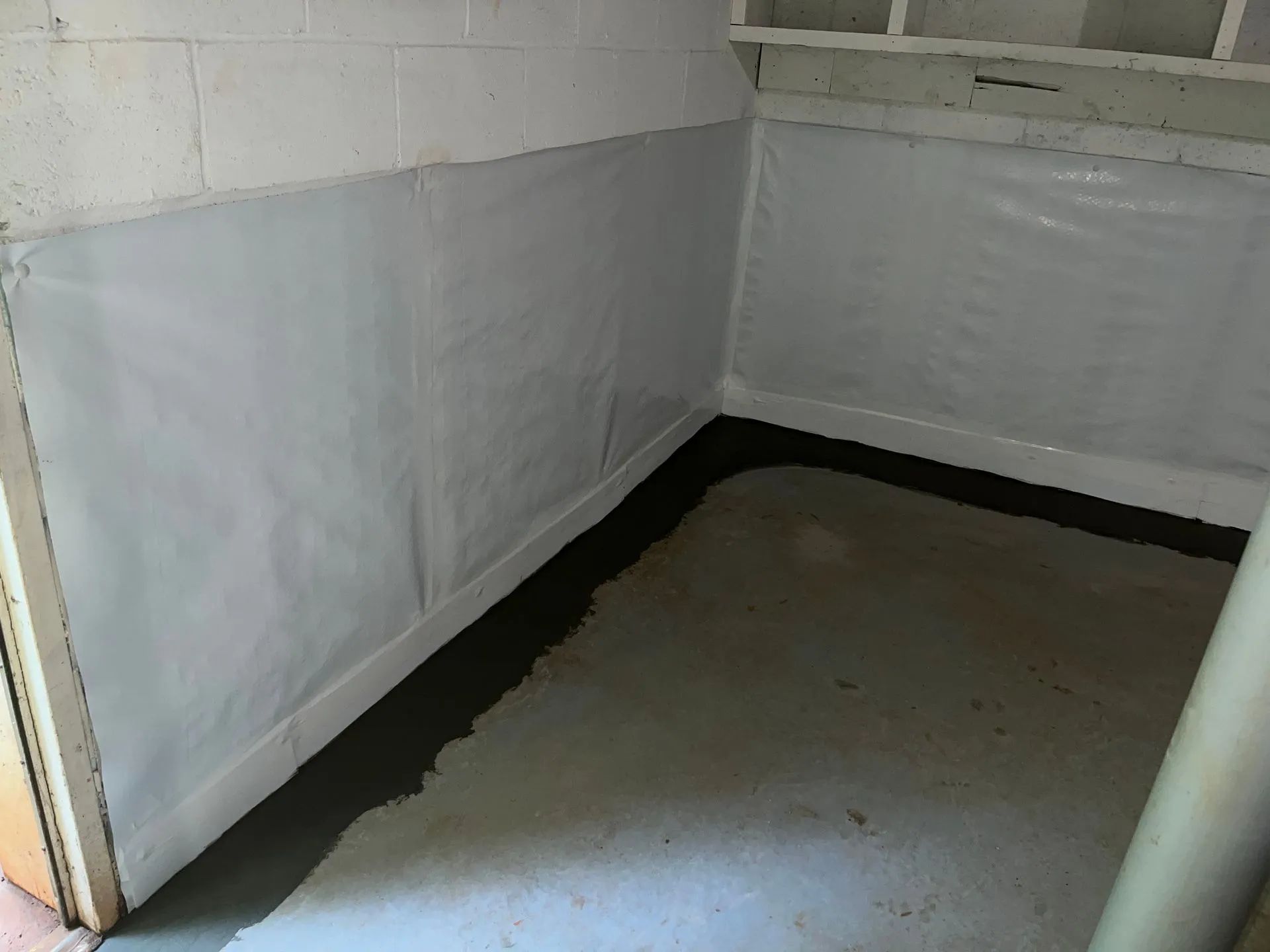
Almost every poured basement has a seam running along the base of the walls where they meet the floor slab. This joint is one of the most common entry points for water because it sits at the lowest point of the wall, exactly where pressure and gravity both work against it at once. Water pushing through the surrounding soil often finds this seam before it finds anything else.
Window Wells
Basement windows set below grade collect rainwater in the well around them, and if that well doesn't drain properly, water sits against the frame and eventually works its way in through the sill or the surrounding wall. This is one of the more overlooked pathways because the leak often appears well inside the room, making it easy to mistake for a wall crack rather than a window well problem.
Porous Concrete
Concrete isn't the solid, impermeable barrier most people picture. It's naturally porous, laced with microscopic channels that can carry moisture through a wall over time, especially once that wall has sat under sustained pressure for years. But that's exactly why a basement can feel damp and carry a faint mineral smell year after year without ever showing a single visible crack.
What Happens Above Ground Matters Just as Much
A lot of what drives water toward your basement walls actually starts well above them.
Gutters and Downspouts
When gutters are clogged or downspouts dump water within a few feet of the foundation, that water saturates the soil right where you least want it saturated. Instead of being carried away from the house, it soaks straight down alongside the wall and adds directly to the hydrostatic pressure already building from rainfall.
TIP: Walk your foundation after the next heavy rain and watch where the downspouts are actually discharging. If water is pooling anywhere within a few feet of the house instead of flowing well away from it, that's a simple fix that can meaningfully reduce pressure on your basement walls.
Grading and Landscaping
The slope of the ground around your home should carry water away from the foundation, not toward it. Over years of mulching, planting, and general yard work, that slope can flatten out or even reverse in spots without anyone noticing. Flower beds built up against the foundation, in particular, tend to hold moisture right where basement walls are most vulnerable.
Warning Signs Worth Taking Seriously
Basements rarely go from dry to flooded overnight. Most give you a warning well before water shows up on the floor, if you know where to look.
Chalky white deposits on the concrete, known as efflorescence, form as water moves through the wall and leaves mineral salts behind on the surface. It's one of the more reliable signs that moisture is already working its way through, even if you've never seen an actual puddle. A musty smell that lingers after you've aired the room out points the same direction. It usually means elevated humidity or early mold growth, often fed by moisture coming in through the floor joint or a hairline crack too small to notice on a quick look.
Then there's staining. Horizontal marks or tide lines near the base of a wall show you where water has reached and evaporated, again and again, and they're one of the best clues for pinpointing the active entry point. Peeling or bubbling paint tells a similar story. Moisture gets trapped behind a surface coating, builds pressure, and eventually lifts it, which means the wall is taking on more water than a coat of paint was ever going to handle.
WARNING: Don't rely on paint, sealant, or a quick patch as your solution once you've spotted any of these signs. Surface treatments can mask a leak for a while, but they don't relieve the hydrostatic pressure causing it, and painting over an actively wet wall usually just delays a bigger repair while the moisture keeps moving through the concrete underneath.
Addressing the Cause, Not Just the Symptom
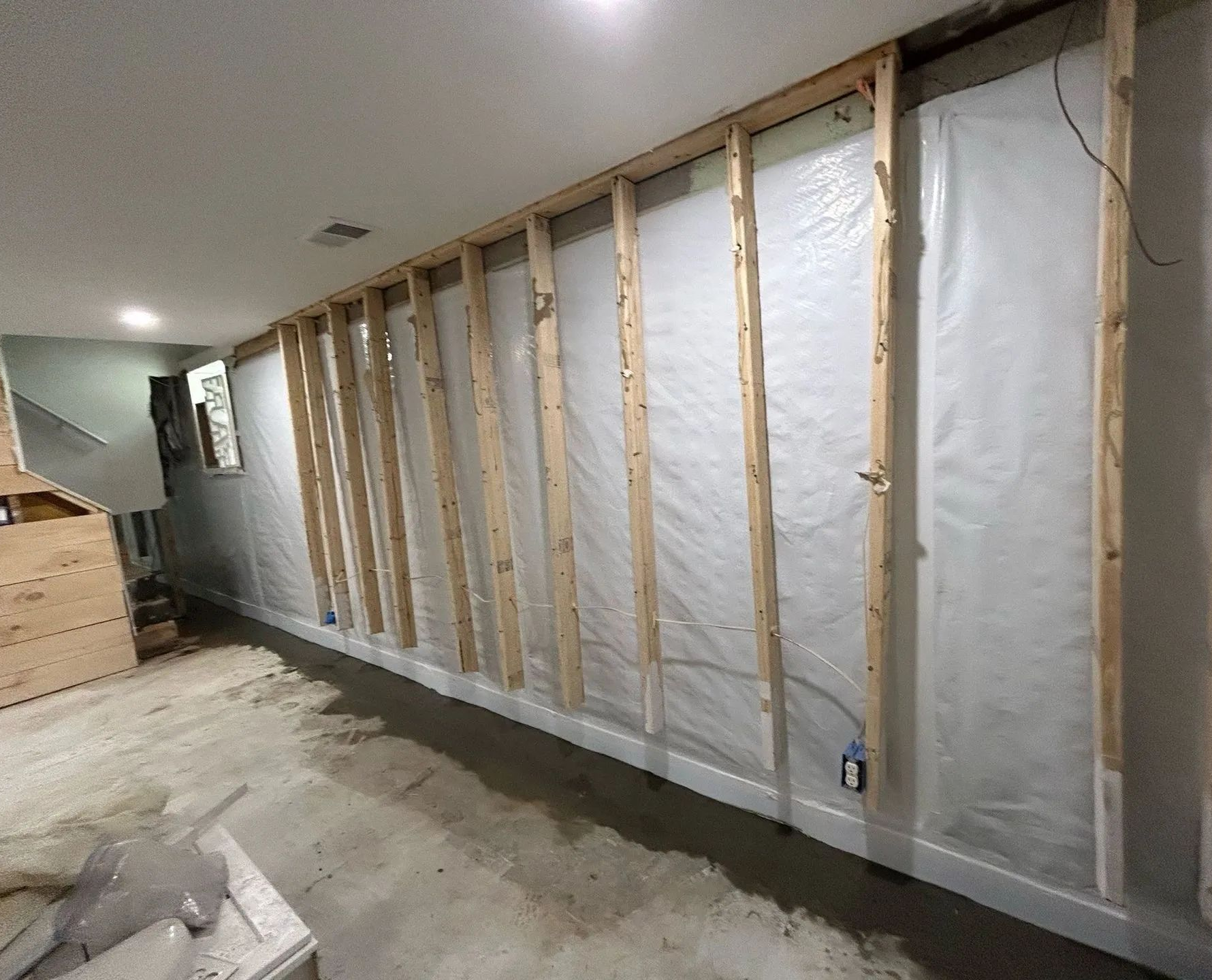
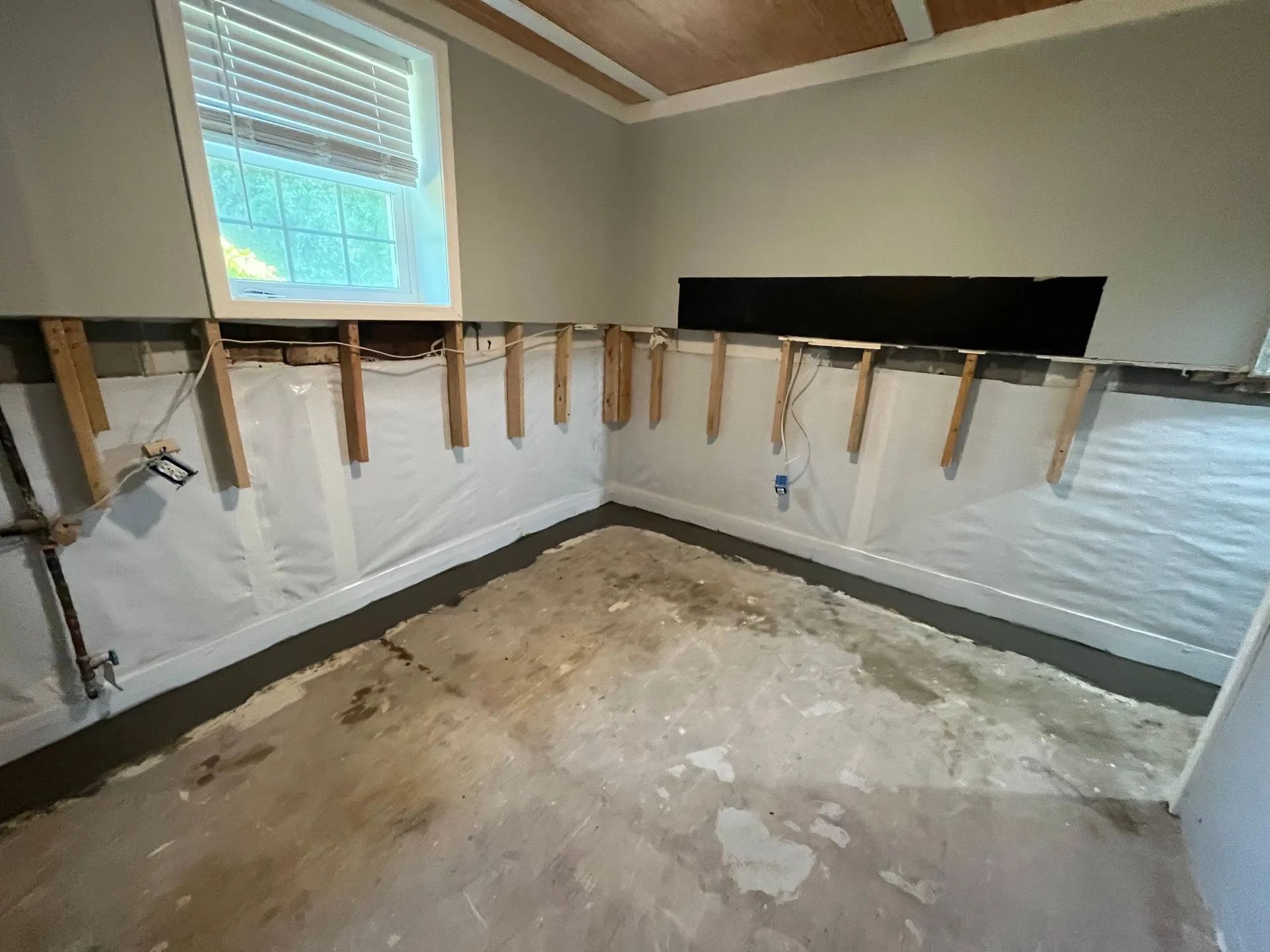
None of the pathways above close themselves. That's the reason caulk and a can of waterproof paint rarely hold up as a real fix. Cracks need to be sealed through the full depth of the wall, not just skimmed over on the surface. Drainage, whether it runs along the interior floor perimeter or gets excavated on the exterior, has to move water away before it ever reaches the point of failure. Window wells need working drainage and a cover, and the grading and gutters that keep dumping water against the foundation need to be corrected too. A basement that's dry today because it hasn't rained hard lately isn't the same thing as a basement that's actually protected.
Every basement tells its own version of this story. A proper inspection looks at the whole picture, the grading outside, the gutters, the visible cracks, the wall-floor joint, and the soil itself, instead of treating one wet spot as the entire problem.
Frequently Asked Questions
Does a small crack in my basement wall really need attention?
Yes. Hairline cracks widen gradually as the soil around your foundation continues its wet-and-dry cycle, and even a thin crack can pass a steady amount of water once hydrostatic pressure builds behind it. Small cracks are easier and less disruptive to address before they widen.
Why does my basement only leak after heavy rain?
Hydrostatic pressure depends on how saturated the soil is, not just how hard it's currently raining. After several days of steady rainfall, the clay soil around your foundation reaches its saturation point, and that's usually when pressure peaks and existing weak points start passing water.
Can I tell where water is entering just by looking at the wall?
Sometimes, but not always. Staining and efflorescence can help identify likely entry points, but water often travels along the inside surface of a wall before it becomes visible, so what you see on the wall isn't always exactly where the water got in.
Is a musty smell without visible water still a problem?
Yes. A persistent musty odor usually means moisture is already present even if you can't see it yet. Get the space checked before it progresses to something you can see and smell without having to guess.
Does fixing my gutters alone solve a basement water problem?
It helps, but it's rarely the whole answer. Correcting gutters and grading reduces how much water reaches the soil against your foundation, but if cracks, joints, or window wells are already established entry points, those pathways still need to be addressed directly.
Getting Ahead of the Next Storm
If your basement has shown any of these signs, waiting rarely makes the problem smaller. Chalky deposits, a lingering musty smell, or a stain near the floor are all early warnings that hydrostatic pressure has already found a way in, and surface patches won't relieve the pressure causing it. A proper fix looks at the whole picture: the grading, the gutters, the cracks, and the soil itself, rather than treating one wet spot as the entire problem.
With 10+ years serving Lawrenceville, Georgia, and the surrounding Atlanta metro, Leader Waterproofing and Construction
knows firsthand how the region's expansive clay soil turns small cracks into recurring leaks. We pinpoint exactly where water is getting in and put a lasting system in place, so reach out and get a professional set of eyes on your foundation before the next round of storms rolls through.